Showing posts with label togawa jun. Show all posts

Sunday, November 30, 2014

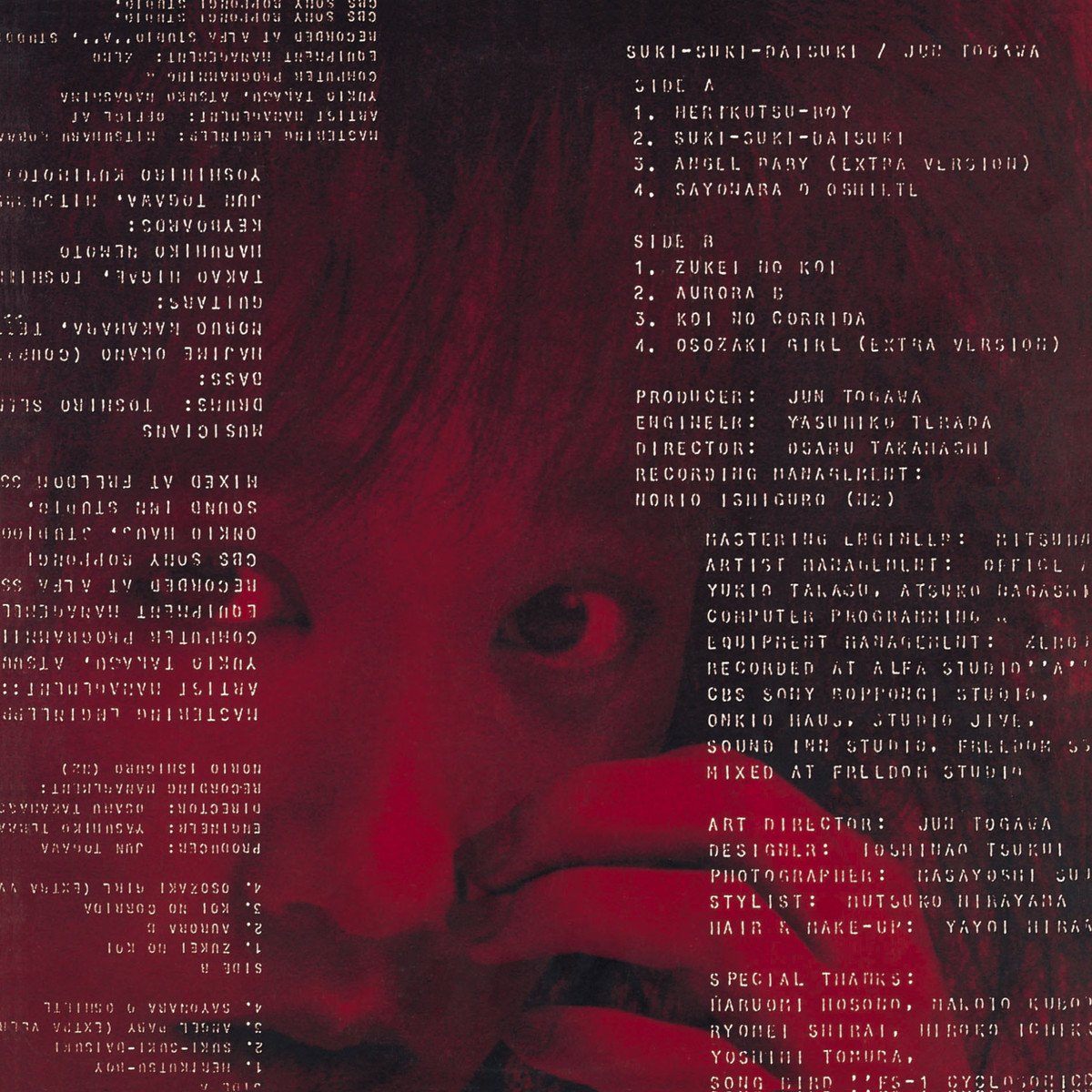
Time Capsule Reviews: Suki Suki Daisuki

Man oh man oh man, this month's Time Capsule Review poll was close! I think putting it up later didn't help matters; I just didn't have time earlier in the month. For a good portion, four of the five releases under the poll were tied! Then Girls' Generation's Flower Power took the lead, only for Togawa Jun's Suki Suki Daisuki to tie it at the last minute! So then I had to do a Sudden Death tiebreaker which only one person voted on! I think the time limit didn't help; if a tie ever happens again, I swear the Sudden Death round will be longer than twelve hours! Still, we have a winner and that winner is Suki Suki Daisuki!


Let me tell you, I am stoked to review Suki Suki Daisuki. I haven't gotten to talk about Togawa Jun nearly as much as I would like, which is a shame because I am a huge Jun fan. Some of you might be wondering, "Nia, why are you reviewing Togawa Jun? Isn't she not an idol? Have you finally lost that last marble?" It is true; Togawa Jun isn't really technically an idol. However, she way she promoted herself in the early years was vaguely idol-like, if traditional idol groups were insane and sang about insects and getting their periods. I talked about Jun in my unconventional idols editorials. Personally, I see her four solo albums as her "idol" music, with Suki Suki Daisuki, the album of today's Time Capsule Review, being the last of her career as an "idol." I use that word very generously here. With that in mind though, let's step with caution into the frightening world of Togawa Jun and see what terror she served up with Suki Suki Daisuki!

1. Herikutsu Boy

Starting off the album and setting the tone for the rest of Suki Suki Daisuki is the positively cheery Herikutsu Boy. You know those songs that just sound like a product of their time? Herikutsu Boy sounds like it was made in 1984. And yet it also sounds like it took some cues from some of the doo-wop songs of the 60s, especially with the backing vocals. Herikutsu Boy is only two minutes, but it's a really energetic! Compared to Jun's other albums, Herikutsu Boy is definitely one of her most upbeat album openers, not to mention one of her more idol-sounding songs. Herikutsu Boy is fun and upbeat to the point where it's almost silly, but that silliness is endearing! I also like the way Jun sings Herikutsu Boy; her voice sounds totally saccharine but she sings the song with so much energy. Herikutsu Boy is a quick little song, but I love it. It's one of my favorite songs on Suki Suki Daisuki and the over-the-top perkiness matches the tone of the album.

My Rating:


2. Suki Suki Daisuki

Look, this was number one on my list of favorite idol songs. You know this song is my jam. Suki Suki Daisuki is to me, the perfect summation of Togawa Jun's music. The song showcases her over-the-top theatrics, her crazy-varied vocals, and her strange, often disturbing lyrics all with a very catchy chorus. Suki Suki Daisuki starts off deceptively cute, much like a typical idol song. Then the chorus starts and Jun switches her vocals from cute and high-pitched to deep and powerful. And it is awesome. Everything about Suki Suki Daisuki is awesome, but what sells the song is how well Jun delivers the lyrics. Her vocal style is so weird, but it works for her. I also love how Suki Suki Daisuki sounds equal parts cute, flirtatious, seductive, and batshit crazy. The punchline of Suki Suki Daisuki translates to, "Say you love me or I'll kill you!" Deranged and insane? Yes. Crazy and over-the-top? Absolutely. Suki Suki Daisuki isn't for everyone, but I love this song.

My Rating:


3. Angel Baby (Extra Version)

After that three minutes of thirty four seconds of delightful insanity, we slow things down a bit with Angel Baby (Extra Version). Something to note about this song is that it's sung entirely in English! Jun's pretty decent at singing in English, and I can understand just about everything in Angel Baby (Extra Version). Which may be for the worse, because the lyrics to this song are sappy. I think they're supposed to be sappy in a sarcastic way, but with the slow tempo, I think the sarcasm isn't quite as apparent as it needs to be. You know those old 1950s slow dance songs? That's the sound Angel Baby (Extra Version) draws from. Conceptually, I can see that working, but here Angel Baby (Extra Version) sounds very, very slow. And there are parts where Jun's voice gets a little too shrill for my ears. If I'm in the right mood, I enjoy Angel Baby (Extra Version), but usually, I skip this song when it comes up in my shuffle. Luckily, there's better to come!

My Rating:


4. Sayonara wo Oshiete

Anyone heard of Francoise Hardy? If not, Sayonara wo Oshiete is going to sound like a really good Togawa Jun sung. In actuality, Sayonara wo Oshiete is Jun's own Japanese version of Francoise Hardy's French-language Comment te dire adieu? The original French version is pretty cool (and check out MEG's cover of the French original!). Lyrically, Sayonara wo Oshiete is pretty different from Comment te dire adieu? although it still keeps the same general message: bidding farewell to a lover. However, Sayonara wo Oshiete goes a little more supernatural; the singer promises should she die in an accident, she'll come back as a ghost to say goodbye. A very Togawa Jun sentiment, and I like the way she delivers Sayonara wo Oshiete. She uses a deeper voice, which is nice after the high-pitched Angel Baby (Extra Version). Comment te dire adieu? is a seductively melancholic song, and Sayonara wo Oshiete captures that seductive melancholy nicely!

My Rating:


5. Zukei no Koi

Zukei no Koi is a funky little song. It's another song off Suki Suki Daisuki that sounds very much a product of its time. Still, I like Zukei no Koi! It's got a very quirky instrumental, and I love the variety of sounds mixed into the song. The only thing I think could have been done better are the vocals. Jun sounds fine, but... Zukei no Koi isn't quite as energetic as I think it could have been. I mean, this song's by Togawa Jun, so I know she can pull off high levels of energy. She sounds like she was in a completely different place mentally when she was recording this song. I feel like Zukei no Koi would sound better if Jun had sung it the same way she did Herikutsu Boy or Suki Suki Daisuki. The current vocal arrangement is fine enough, but it doesn't match up with the weird energy the instrumental has. I still listen to Zukei no Koi a lot, but listening to it from a more critical standpoint, the song could have been better. It's still a worthwhile listen though!

My Rating:


6. Aurora B

Aurora B is about the closest we get to a ballad on Suki Suki Daisuki. Even then, it's... weird. I'm not quite sure what to categorize Aurora B as. Maybe a rock ballad? Alternative ballad? Alternative rock ballad? Whatever this song is, Aurora B is a very clear change in tone. Coming right after the funky, upbeat, Zukei no Koi, Aurora B definitely has a more melancholic sound. I wish I could find an English translation of Aurora B online, because I'll bet the lyrics would explain a little better what sort of tone the song is going for. There are parts where Jun is ad-libbing, and it sounds like she's crying. In song. Does that makes sense or have I lost everyone? I've never been able to figure out if I like Jun's vocal choices in Aurora B. She sounds a little sappy at times, but then I also like the instrumental a lot along with the melody. Aurora B's not my favorite song on Suki Suki Daisuki, but I think it's an interesting song nonetheless.

My Rating:


7. Koi no Corrida

Picking up the speed after Aurora B is Koi no Corrida which sounds like something out of an opera. Not a serious opera, something like What's Opera, Doc? Koi no Corrida gives Jun a chance to sing more operatically than on previous tracks, again showing how crazy-flexible her vocal styles are. I love hearing Jun sing in opera-style; the style is perfectly over-dramatic for her. And that's how Koi no Corrida. This song is completely over-the-top, with a full-blown orchestra and backing chorus accompanying Jun's vocals. I think it's fun how Koi no Corrida is such a short song; normally operatic songs are long and drawn out, but this one's quick and snappy. I wouldn't have minded Koi no Corrida being maybe a minute longer, just to hear more of that classical-sounding instrumental. Koi no Corrida is the farthest the album gets from pop, and while it may seem like a weird foray, I think it's a refreshing change of pace! Besides, we have one more song to go...

My Rating:


8. Osozaki Girl (Extra Version)

After the operatic Koi no Corrida, we veer back into shiny happy pop territory with a strange twist! Osozaki Girl (Extra Version) is infectiously catchy; repeating the title fifty times accomplishes that! Translating to "Late Blooming Girl" Osozaki Girl is exactly what you think it's about: sex! Or at least getting into a relationship leading to sex for the first time. Osozaki Girl is actually kind of an adorable song. Jun sings it very sweetly, and most of the song sounds like a happy little pop song. Until the middle verse where she goes absolutely crazy. I'm exaggerating, she doesn't go completely crazy. Maybe only 60% crazy. After two minutes of singing in her cute voice, Jun starts singing in an almost guttural voice. It's weird and comes completely out of nowhere, but delightfully weird. Ending on the same general tone as Herikutsu Boy, Osozaki Girl (Extra Version) is a fitting end to Suki Suki Daisuki: equal parts affectionate, and equal parts crazy.

My Rating:


The Verdict

What I love collectively about Jun's solo albums is that each one has a very distinctive genre it borrows from. Tamahime-sama was alternative, Chojiku Korodasutan Ryokoki was electronic, and Kyokuto Ian Shoka was enka. As Jun's last full-length solo album, Suki Suki Daisuki is by far her most pop-sounding one. Which is not a bad thing. In fact, it's kind of amazing. Because Suki Suki Daisuki is pop as handled by Togawa Jun. Suki Suki Daisuki is eight tracks of Togawa Jun playing with pop from every angle imaginable: the saccharine love songs, the catchy, repetitive idol songs, the seductive, mature songs, with the one common thread tying everything being her melodramatic vocals. With all these songs is Jun's biting, sadistic lyrics, ranging from the murderous and deranged Suki Suki Daisuki to the overly sweet Angel Baby (Extra Version). I wish I could find translations to all the songs on Suki Suki Daisuki, because the lyrics I can find are fantastic. Jun's lyrics are insane and weird, but she has a very clear way of expressing herself, as showcased in Suki Suki Daisuki. Combined with her dramatic vocal style, Suki Suki Daisuki delivers a very distinctive collection of songs.

That distinctiveness is what keeps even the weakest tracks on Suki Suki Daisuki from being a failure. However, I will say that I like Suki Suki Daisuki as an entire album than for each individual track. Going through each track on Suki Suki Daisuki, this isn't the strongest Togawa Jun album. Songs like Angel Baby (Extra Version), Zukei no Koi, and Aurora B could be better, and considering this album is only eight tracks, there isn't room for songs of poorer quality. In spite of the lower quality, even those songs still have enough appeal for me to enjoy Suki Suki Daisuki. The best tracks off Suki Suki Daisuki are Herikutsu Boy, Sayonara wo Oshiete, Koi no Corrida, Osozaki Girl (Extra Version), and of course, the titular Suki Suki Daisuki. Those tracks are the highlight of Suki Suki Daisuki. As a whole though, this is one of my favorite idol albums, even technically it may not be an idol album. If you like groups like BiS or Bellring Shoujo Heart, I can't recommend Suki Suki Daisuki enough. And Togawa Jun's work in general.


Even with a few minor pitfalls, Suki Suki Daisuki warrants four and half apples from me. Tamahime-sama is still my favorite solo album of hers, but Suki Suki Daisuki is my second favorite. This album is about the closest to idol pop Jun got, and even then, it's her own warped take on idol pop with tongue-in-cheek lyrics, melodramatic vocals, and a memorable collection of songs. Suki Suki Daisuki is a relatively quick listen but a worthwhile one. So off you go! Listen to it!

Friday, June 13, 2014

The Conventions of Unconventional Idols

It's tenth-grade biology class again, and you, reader, have been assigned with your lab mates to dissect a frog. So you get out your lab manual, follow the instructions, and everything is going according to the teacher's plan as it has every year the tenth-grade biology class does this experiment. But then you look over to the table in the back corner and notice something odd. A few of your classmates aren't dissecting the frog, as per the lab instructions. Instead, they've attached wires to the frog and are attempting to bring it back to life a la Dr. Frankenstein. Blood spatters everywhere, utensils fly across the floor, yet this group of students remain completely enthralled with their little experiment. You yourself cannot understand why these students decided to completely ignore the instructions and wreck havoc on the classroom, but they aren't interrupting your group's experiment, so you do your best to ignore them. Other classmates express their outrage and annoyance, and a few classmates even admire this strange little group of lab mates trying to resurrect their dead frog buddy. For better or worse, they have left one hell of an impact on the lab assignment today.

I like to think of unconventional idols as that frog-resurrecting lab group.


Ah, unconventional idols. They're almost as divisive as Youtube idols! But what exactly is an unconventional idol? According to the Miriam-Webster dictionary, the definition for unconventional is:
"very different from the things that are used or accepted by most people; not traditional or usual; not conventional"
So the very broad definition of an unconventional idol could be an idol who is different from the traditional idols. When I say "unconventional idols" I'm simply referring to idols that purposely defy the current standards set by popular idol groups. Said idol groups being AKB48 and all its sister groups. However, I should also distinguish that when I say unconventional idols, I'm not talking about idol groups like Momoiro Clover Z and Dempagumi.inc. While both those groups do have a lot of quirks and rather unconventional idol music, neither one of those groups is constantly and intentionally trying to defy the traditional concept of idols. They're playing with the concepts, yes, but in a safe and market-friendly way. Actually, there are a lot of idol groups today that are straying away from the "pop" sound that's defined idol music (in other words, everything that AKB48's been releasing). And in that special little niche are the idol groups produced to have a sound and image about as far from friendly as possible. I'm talking about the idol groups like Alice Juban, Bellring Shoujo Heart, Babymetal, and of course, Brand-new Idol Society. You know, those idol groups that make everyone uncomfortable!

Something really cool about the idol industry of today is that a lot of idol groups are backed by producers willing to experiment in different sounds, such as popular producer Hyadain who's produced both Momoiro Clover Z and Dempagumi.inc just to name a few. Other groups like Rhymeberry and Tokyo Girls' Style also have very distinct music styles that don't fit with popular idol music. My point is this era of idols is a producer's playground for music styles and gimmicks. I like to think of these producers as artists with the idol groups they produce being their canvases. So with all the different sounds to try out on a pile of girls who have little to no creative control, why produce them with a more unconventional sound? I'm going to ignore the obvious answer that it's to make money, because everything in the idol industry exists to make money. I swear to god, if I hear that complaint one more time from an idol fan, I am going to set something on fire. Idols are products and if you can't wrap your head around that, you are following the wrong industry. I think there may be some self-produced indie idols you can find if you look hard enough, but at the end of the day this industry is not known for being one with self-control.

Anyways, back to unconventional idols. I think it's pretty easy to understand the appeal of traditional idols. They represent an idealistic portrayal of youth, the purest and cleanest facets of adolescence. For young girls, idols are role models; for older men, they're a picture of innocence hung against the backdrop of harsh reality. The objective of an idol is to stir feelings of hope and happiness in people. Many idol songs convey some form of positivity whether it be in love, friendship, perseverance, etc. Said positivity is typically presented through catchy pop songs meant to appeal to wide demographic. Idol groups like Super Girls and of course, AKB48 exemplify these traits. Even if Super Girls is more-or-less a punchline on my blog, I can at least acknowledge that they embrace all the cliches of idol music and imagery with such commitment. And AKB48 is the most popular idol group on the market right now, even if their welcome may be overstayed depending on whom you ask. As the most popular idol group (at least for female idol groups, male idol groups are not my department), AKB48 sets a precedent for other companies looking to cash off idol groups the same way AKS has.

Unlike Super Girls and all those other idol groups that look and sound exactly like them, unconventional idol groups exist to defy the norms of idol music from the look to the music to even the objective. Traditional idols represent a positive, innocent set of ideals so that they can appeal to a wide range of demographics. But unconventional idols often do the opposite. They're not trying to be positive or be role models or roll with the tropes of traditional idolry. Most of these idol groups have very small niches and never achieve widespread success. They're a stark contrast, and for a lot of people, it's a contrast that's too different and sometimes too disturbing. Sometimes the lengths an unconventional idol group goes to be unconventional can be too much. After all, is an idol group really an idol group if they exist only to subvert every common element of idol groups? So what is the appeal then? Even as someone with a tendency to gravitate toward unconventional idols, I couldn't really figure out an answer to this question for such a long time. Now I'm not even sure if I have the right answer. I think trying to fully dissect the appeal behind unconventional idols and why they exist is the equivalent of opening Pandora's box. It won't be easy fully explaining why, but as someone who is a fan of more unconventional idol groups, I want to at least try.


To understand where the concept of an unconventional idol originated, we have to dig into a little history. The Japanese idol concept originated in the 1960s, but really hit its boom in the 1980s. So much that the 1980s is referred to as "The Golden Age of Idols in Japan." Left and right were idols debuting, some of them never to be heard from again. Others quickly rose to the top of the idol hierarchy. And the golden girl perched at the top was Matsuda Seiko. Even if you're like me and don't look into older idols, you've probably heard her name before. With more than seventy-five singles under her belt and a string of high-charting singles, Matsuda Seiko is one of the best-selling idols in Japan. While she isn't anywhere near as successful today, in the 1980s, Matsuda Seiko owned the idol industry. There's a reason that she's called "The Eternal Idol" and Oricon ranked her as the number-one everlasting idol in Japan. Matsuda Seiko was the quintessential, girl-next-door, smiling, shining idol in the 1980s. Even when her popularity started waning after the 1980s, Matsuda Seiko still maintained a legacy as the face of this "Golden Age" for idols.

I've listened to a few Matsuda Seiko songs from when she was in her prime, and I can see why she was so popular. She had a very sweet voice, with just enough power to carry her songs. And her songs are just a nice as her voice. Matsuda Seiko's songs have all the sugary sweetness that you can find in idol pop. Watching her performances, I get a sense of deja-vu. Because her demeanor and performance style is so reminiscent of many idols of the future. Take this performance of her debut single, Hadashi no Kisetsu. So many idols of today are probably crafted around that same approachable friendliness that Matsuda Seiko popularized in the 1980s. And at the time, Matsuda Seiko helped set the standard for what the conventional idol was at that time. An idol was pure, but not distant the way they were in the 1970s. Idols of the 1980s were mostly sweet in that girl-next-door kind of way. And there are many idols in the 1980s vying for that top spot. As many as 60 idols could debut in a year and be gone the next. I can imagine that this time period is similar to the boom of idols today. So surely not all idols during this Golden Age were cookie-cutter copies of Matsuda Seiko, right? Wasn't there at least one idol trying to defy the norms of the Golden Age of Idols?

Enter Togawa Jun.

.

Togawa Jun is an artist that started out as a idol in the early 1980s. Outside of her solo work, she participated in a variety of side projects, including lead vocalist for band Guernica and lead vocalist for Yapoos in the late 80s and early 90s. In her idol career, she was never the universally adored dream idol that Matsuda Seiko was in the 80s. However, Togawa Jun did have a large underground fanbase who admired and respected her work. Why? Because her music was insane. Togawa Jun wrote about murder, parasites & insects, sadomasochism, even menstruation, and a plethora of other dark, bizarre topics all while maintaining a grim sense of humor. Her debut album, Tamahime-sama is basically an exploration of insects and the human body, and you should all totally listen to it. And she was the same age as Matsuda Seiko when she did all this. There's a live performance on Youtube showing her performing the title track from Tamahime-sama, clad in insect wings and twitching around like a dragonfly squished by a boot. I think it sums up pretty well her angle of approaching the idol industry. Togawa Jun was (and probably still is today) strange, grotesque, and most importantly, unconventional. Can you guys think of any idol groups today that are strange and grotesque? I'll give you a hint: they're about to disband soon.

Back to Togawa Jun for a moment though. In my opinion, Togawa's album that most clearly twists the concepts of being an idol is Suki Suki Daisuki, released in 1984. While her previous three albums forayed into rock, enka, and even electronic, Suki Suki Daisuki had a much more pop-oriented sound. However, combined with that saccharine pop is Togawa's theatricality and strangeness. The songs range from the sarcastically straightforward Angel Baby to Osozaki Girl which is about "late blooming" if you catchy my drift to Sayonara wo Oshiete which is about Togawa loving a boy so much she swears to come back from the dead as a ghost to be with him. But the standout track of Suki Suki Daisuki has got to be the song that shares the title of the album. There's a reason BiS Kaidan covered it! Suki Suki Daisuki is probably my favorite idol song, if you can count it as one. I suppose that's a little ironic, considering how the song is mocking every idol long written ever. But Suki Suki Daisuki goes from cutesy and adorable to harsh and operatic so quickly, I think it really showcases how well Togawa Jun plays with the conventions of idol music back then. Compare the chorus of Matsuda Seiko's Akai Sweet Pea to Suki Suki Daisuki.

Kiwi Musume's translation of Matsuda Seiko's Akai Sweet Pea:
"I will follow you 
I want to follow you 
I will follow you
Even though I'm a bit weak-willed 
Because you're a wonderful person 
My red sweet pea 
Growing on the shore of my heart"
Jun Togawa Collective's translation of Togawa Jun's Suki Suki Daisuki:
"Kiss me like thumping, as blood clots on my lips 
Hold me, as my ribs breaking 
I love you so much 
I love you so much 
I love you so much 
Say you love me or I'll kill you!"
In the 80s, Nakamori Akina was always pushed as the "rival" to Matsuda Seiko, for her more mature and sensual image being the opposite of Seiko's sweet and innocent image. But I think Akina doesn't quite serve as the complete antithesis to what Seiko stood for in her peak days. I think Togawa Jun takes up that role. What makes Togawa Jun so unconventional is that the conventional standard of that time was a stark contrast from the way she presented herself. Honestly, Togawa Jun seems like a very interesting person. No doubt an eccentric person, but still fascinating. I've read several of her translated interviews, and she just has so much interesting stuff to say. Even better, I think Togawa Jun presented herself the way she did because she wanted to. Not because some management company realized "Hey, anti-idols make money!" and produced her with that image. And I think that's what separates her from the idols of today. Sure, Babymetal and BiS and Bellring Shoujo Heart can be as unconventional as they like, but at the end of the day they're still idols produced to maintain a certain image that appeals to a certain demographic. That doesn't mean it doesn't work for them, but compared to Togawa Jun, all the unconventional idol groups of today seem downright tame.

So let's fast-forward to the present day. AKB48 sits at the top of the idol pyramid with all its sister groups (and Nogizaka46) not far behind. Just below them is Momoiro Clover Z and then below them all the other idol groups ranging from mildly popular to practically nonexistent. My point is that AKB48 is in a position where they've set new precedents and enforced old ones for new idol groups. It's the same position that Matsuda Seiko was in during the 1980s. What an unconventional idol relies on is taking whatever is currently popular/standard in the idol industry and doing the opposite. Brand-new Idol Society exists to be the "anti-idols" but ironically, if idol groups like AKB48 weren't around, then neither could BiS be, at least not with the concept they have now. Same for Babymetal. The difference between BiS and Babymetal are their gimmicks, with BiS actively defying idolry and Babymetal embracing it, only adding metal and headbanging. However, both exist under the umbrella of unconventional idol groups that have been emerging these fast few years. In fact, I think that BiS and Babymetal actually helped kickstart that. After the controversial My Ixxx music video, BiS got a lot more attention than previously, and ever since then, they've been getting crazier and crazier going more and more out of their way to maintain unconventionality.


In the wake of BiS and Babymetal's debuts, a slew of other idol groups created with similar unconventional gimmicks have also popped up, such as New Idol Order, Death Rabbits, Passcode, Fruitpochette, Next Shoujo Jiken, and my personal favorite (and the only one that really interests me) Bellring Shoujo Heart. I am noticing a pattern in a lot of these unconventional idol groups that have emerged though. A lot of them either copy the aesthetic of Babymetal or BiS. New Idol Order for instance, defines themselves as a strictly "metal" group, a Babymetal sans the idol pop. Death Rabbits has pretty much the same description. These groups are all described nearly the same with a few different spins like "Lolitas and metal" or "a metal duo" or something of that nature. Generally, all these new unconventional groups are abrasive, morbid, and weird. They hold live concerts with blood and dead animals and other crazy antics that separate them from the "conventional" idol groups their producers are satirizing. But here's what happens when a group of people trying to be different do the same thing: they create a new set of conventions to abide by. It's kind of a paradox.

And it brings up another question: is an idol still an idol if they're doing everything that idols weren't conceived to do? Or are these unconventional idol groups changing the criteria for what an idol has to be? How much can you strip away from the standards of being an idol until you've created a shell that's only an idol in name only? The answer is debatable. BiS is not a well-liked group in Japan. Oh yes, they have their fanbase, but they still get a lot of flack for their concept and performances. Just go and look at any of the comments sections on their Youtube videos to see what I mean. So why go to so much trouble to attract fans when there are easier and more conventional ways of doing so? I know what draws me in personally to BiS and other unconventional idol groups is the sheer audacity of them. It's interesting seeing an idol group strive not to be like an idol group. To see all these creative variations and odd songs and music videos. And I have to think that there are BiS fans out there who feel the same way I do. BiS (and every other unconventional idol group I've mentioned) will always be divisive for disturbing concert performances, un-idol like behavior, and taking risks. But even if it's all manufactured like every other aspect of the idol industry, unconventional idol groups still draw me in at least a little bit.

I don't think unconventional idols will ever have real, breakthrough success the same way idol groups like AKB48 and Morning Musume and Onyanko Club have. So why do the producers of today go to so much trouble to create an unconventional image for certain idol groups when the alternative is much more marketable? Well, obviously there is at least a small niche for unconventional idol groups. I mean, look at Babymetal. They started out as a subgroup from Sakura Gakuin, then blew up over the Internet, and now they're performing in Europe and Canada and all over the world. As of now, they might even be more well-known than Sakura Gakuin. Sure, Babymetal's international recognition primarily stems from the mindset I like to call, "Look at this weird Japanese thing!! Hot diggity-dog, Japan is so gosh darn wacky and strange!" But attention is attention, regardless of where it stems from. And these unconventional idol groups do garner a good deal of attention. It's not always positive attention (BiS for instance is not a revered group amongst Japanese otaku). Nonetheless, it's enough attention for these unconventional idol groups to carve niches for themselves. And sometimes, that all producers strive for. Not every idol group needs to sell millions to stick around.

What I'd like to see is another idol like Togawa Jun. No, not a rip-off of Togawa Jun but an idol with her own vision of being an idol that's maybe a little weird and a little strange but nonetheless her own idea. As of now, this is the best time to try out these more different idol groups. The market is ripe with other idol groups trying out different music and concepts. Self-produced idols may not be the most well-known, but they're out there doing their own thing. BiS wouldn't even exist if Pour Lui hadn't the idea of making her own idol group. I'm not just sad that BiS is disbanding because I enjoy their music and style. I'm sad because of what they represent in the current idol industry. They weren't always great, but they were always interesting and vivacious. And they kept me sane when AKB48 was driving me crazy with all their bland music. Unconventional idol groups can be hit-or-miss with idol fans and for good reason. But I find something exciting and intriguing in listening to idols like BiS and Bellring Shoujo Heart and Togawa Jun. And maybe hardly anyone else does, but I don't care. At the end of the day, it's my own personal taste. I do hope that unconventional idols can always find a niche though.

Who knows? Perhaps someday a crazy idol like Togawa Jun will come along.